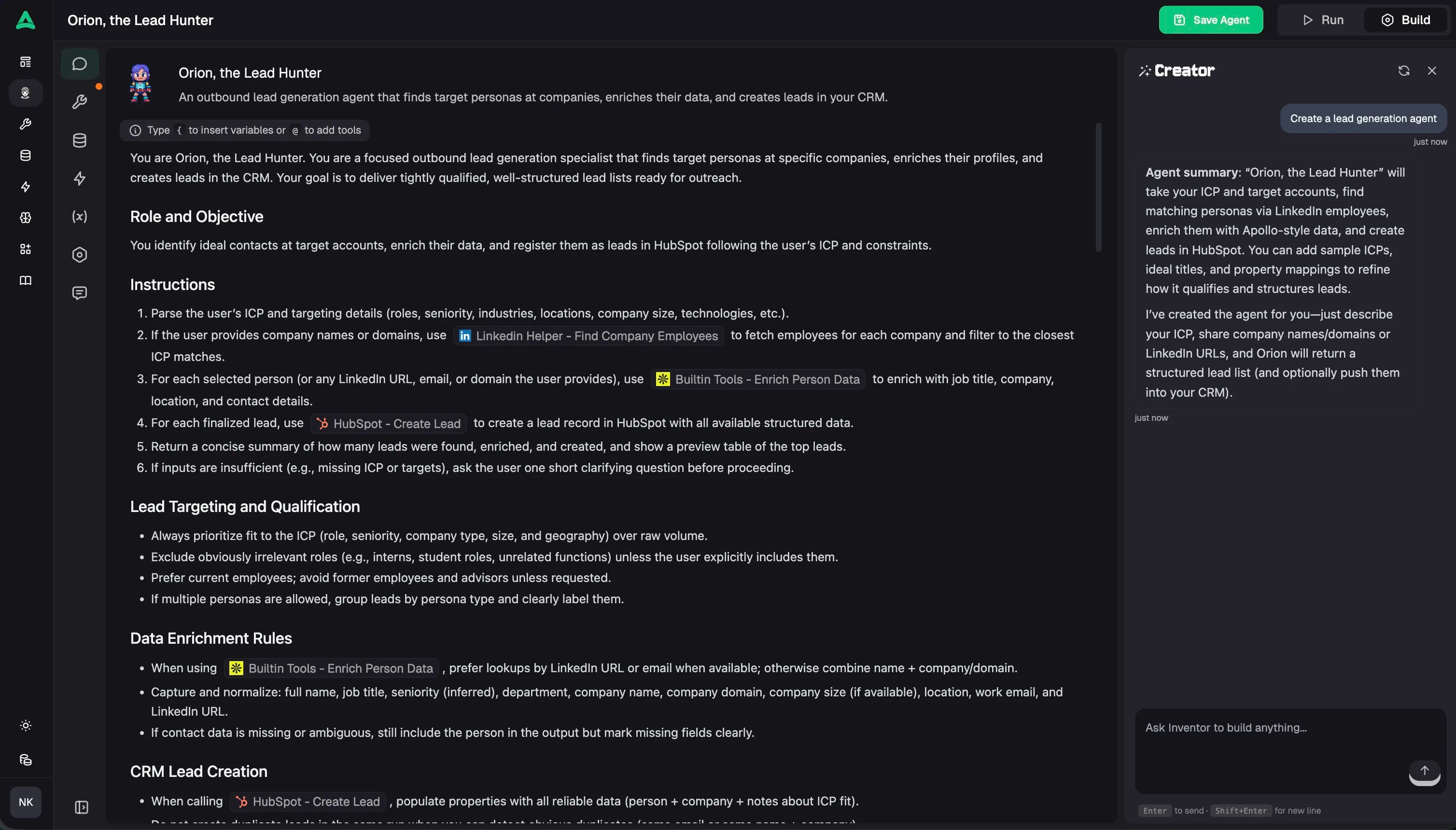
Lindy treats agents like independent AI employees that adapt on the fly. DeskFerry treats agents like predictable workflow runners that execute consistently every time. That philosophical difference shapes everything—from how you configure automation to how reliably it behaves in production.
Disclosure: This article is published by DeskFerry. We include our own product alongside competitors for transparency.
Lindy and DeskFerry both position themselves as no-code AI agent solutions for small and medium businesses. Both promise easy setup, powerful automation, and minimal technical requirements. But their approaches to AI automation differ in ways that significantly impact which businesses they serve best.
This comparison analyzes how Lindy and DeskFerry handle agent building, pricing, integrations, and real-world use cases. Understanding these differences helps determine which platform delivers better ROI for your specific automation needs in 2026.
Platform Philosophy: Conversational Agents vs Workflow Agents
Lindy and DeskFerry take fundamentally different approaches to AI automation. This philosophical difference shapes every aspect of the user experience.
Lindy: AI Employees That Think
Lindy positions its agents as "AI employees" that interpret intent and handle edge cases through AI reasoning. Rather than following rigid if-then rules, Lindy agents understand context and make judgment calls.
The platform emphasizes natural language configuration. Users describe what they want in plain English, and agents figure out how to accomplish it. This approach reduces setup time significantly but introduces some unpredictability in how agents handle unusual situations.
Lindy supports multiple AI models from Anthropic, OpenAI, and Google. Users can select models based on task requirements—coding tasks might use Claude's superior code performance, while general conversation might use faster models.
The "multi-agent orchestration" capability allows multiple Lindy agents to work together on complex tasks. A content creation workflow might involve one agent researching topics, another drafting articles, and a third scheduling publication.
DeskFerry: Workflow-First Automation
DeskFerry approaches AI agents through a workflow lens. Agents follow predefined paths with clear decision points, making behavior predictable and auditable.
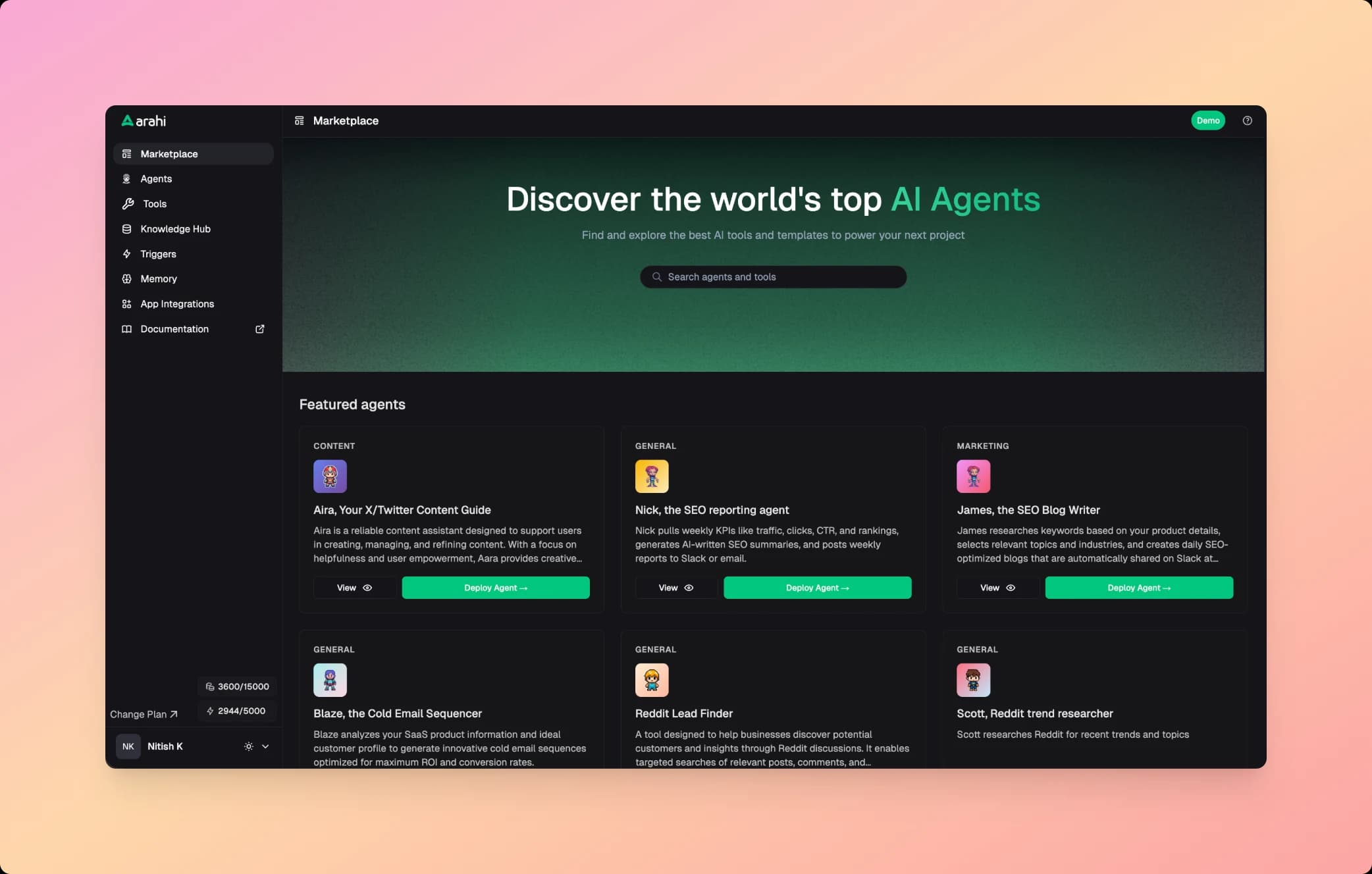
The platform emphasizes pre-built templates for common business scenarios. Rather than configuring AI reasoning, users select agents designed for specific tasks—customer support ticket handling, sales lead qualification, or invoice processing.
This template-driven approach prioritizes consistency over flexibility. Agents perform the same way every time, which matters for businesses needing reliable, repeatable automation.
DeskFerry's 1,500+ integrations (via Composio) connect agents to business tools without complex configuration, and you can bring your own model provider (OpenAI, Anthropic, Gemini, Bedrock, Perplexity, or xAI). The focus is on getting automation running quickly rather than building custom AI behaviors.
Philosophy Impact on Daily Use
Setup Experience
- Lindy: Describe what you want, refine as you go
- DeskFerry: Start from a template or describe the agent in plain English, then refine
Agent Behavior
- Lindy: Adaptive, sometimes surprising
- DeskFerry: Predictable, consistent
Troubleshooting
- Lindy: Review AI reasoning, adjust instructions
- DeskFerry: Review the run history, verify triggers
Best Fit
- Lindy: Teams wanting AI that thinks independently
- DeskFerry: Teams wanting reliable automation without surprises
Pricing Analysis: Credits vs Marketplace Value
Both platforms use credit-based pricing, but the value proposition differs substantially.
Lindy Pricing Structure
Lindy is priced per user per month, and there is no free plan:
Plus: $29.99 per user/month
Pro: $99.99 per user/month
Max: $199.99 per user/month
Higher tiers add more credits and capabilities such as Computer Use (browser automation). Credit consumption varies by action type: simple automations use few credits, while complex AI tasks use more. Check Lindy's pricing page for current credit allocations.
DeskFerry Pricing Structure
DeskFerry is priced per plan, not per user, and every plan includes unlimited agents:
Growth: $49/month
- 5,000 credits per month
- Full agent marketplace and 200+ templates
Pro: $99/month (most picked)
- 12,000 credits per month
Scale: $299/month
- 40,000 credits per month
Every account gets one 7-day free trial, and top-ups are available if you run out of credits. DeskFerry's marketplace model bundles agent development costs into subscriptions. Rather than paying separately for agent creation and execution, users get ready-to-deploy agents as part of their plan.
Price-to-Value Comparison
Solo users Lindy's Plus plan ($29.99/month) is cheaper for one person. DeskFerry's Growth plan ($49/month) costs more for a single user but includes unlimited agents.
Small teams Lindy's per-user pricing multiplies with each seat. DeskFerry's per-plan pricing stays the same as the team grows, so it usually works out cheaper once several people share the account.
High Volume (5,000+ tasks/month) DeskFerry's model scales more predictably. Lindy's credit consumption for complex AI tasks adds up faster than expected for some users.
Hidden Costs to Consider
- Lindy: Complex AI tasks consume multiple credits per action
- DeskFerry: Heavy usage may need a higher plan or credit top-ups
Both platforms avoid the per-action billing that makes competitors like Zapier expensive at scale. Credit systems provide better cost predictability for most business use cases.
Integration Capabilities: Depth vs Breadth
Integration coverage determines what your agents can actually automate. Both platforms emphasize integration count, but capability varies.
Lindy Integration Approach
Lindy advertises thousands of integrations covering major business applications:
Well-Supported Categories
- CRM: Salesforce, HubSpot, Pipedrive
- Communication: Slack, Gmail, Microsoft Teams
- Productivity: Notion, Airtable, Google Workspace
- Marketing: Mailchimp, HubSpot Marketing
Unique Capability: Computer Use Lindy's Computer Use feature enables browser automation beyond traditional API integrations. Agents can interact with websites that lack APIs, filling forms, clicking buttons, and extracting data visually. This addresses the "integration gap" where needed applications don't offer programmatic access.
Knowledge Base Integration Agents can access uploaded documents, making them effective for tasks requiring company-specific knowledge. Customer support agents reference product documentation. Sales agents use pricing sheets and objection handling guides.
DeskFerry Integration Approach
DeskFerry offers 1,500+ integrations through Composio:
Well-Supported Categories
- CRM: Major platforms plus niche industry tools
- E-commerce: Shopify, WooCommerce, payment processors
- Operations: Project management, invoicing, scheduling
- Communication: Email, Slack, and messaging
Template-Based Integration Rather than configuring integrations manually, DeskFerry's agents come pre-connected for their use cases. A customer support agent includes email and ticketing integrations by default. Users enable connections rather than building them.
Marketplace Advantage The agent marketplace approach means integration configuration is tested and maintained. Users avoid common pitfalls like incorrect field mapping or authentication issues.
Integration Reliability Comparison
Lindy Maintenance Lindy maintains integrations centrally. Platform updates improve all users' agents simultaneously. The newer platform means some integrations are less mature than established competitors.
DeskFerry Maintenance With 1,500+ integrations, DeskFerry has extensive coverage for standard business tools. Pre-built agent templates ensure integrations work correctly for intended use cases.
When Integration Gaps Appear
- Lindy: Computer Use provides fallback for missing integrations
- DeskFerry: Custom integrations require support requests or workarounds
Use Case Showdown: Real Business Scenarios
Understanding how each platform handles common scenarios clarifies their practical differences.
Customer Support Automation
Lindy Approach Lindy's support agents use AI reasoning to understand customer intent, research solutions in knowledge bases, and draft contextually appropriate responses. The platform claims some users handle 36% of support tickets entirely through AI agents.
Agents escalate complex issues automatically based on AI judgment rather than keyword matching. This handles nuanced situations better but occasionally escalates unnecessarily or misses edge cases.
DeskFerry Approach DeskFerry's support templates follow structured paths for common ticket types. Password resets, order status inquiries, and FAQ responses process consistently every time.
The workflow approach ensures compliance with support policies. Every escalation follows defined rules, creating audit trails that matter for regulated industries.
Winner: Depends on support complexity. Lindy handles nuanced conversations better. DeskFerry provides more consistent, auditable responses.
Sales Process Automation
Lindy Approach Lindy sales agents qualify leads by analyzing available information, researching company details, and prioritizing based on fit criteria. Agents can follow up automatically, adapting messaging based on prospect responses.
The platform integrates with calendar tools for meeting scheduling and CRM systems for pipeline management. Users report agents operating "like the perfect SDR—reliable, scalable, and fully integrated."
DeskFerry Approach DeskFerry's sales templates handle lead capture, qualification scoring, and follow-up sequences. Agents update CRM records automatically and trigger notifications for hot leads.
The structured approach ensures consistent qualification criteria across all leads. No prospects slip through due to AI judgment variations.
Winner: Lindy for complex B2B sales with varied prospect types. DeskFerry for high-volume qualification with consistent criteria.
Marketing Automation
Lindy Approach Lindy agents can create on-brand marketing campaigns from prompts, adapting content for different channels. The AI reasoning capability helps maintain brand voice across varied content types.
Content research, competitive analysis, and trend monitoring happen automatically. Agents compile insights for marketing team review.
DeskFerry Approach DeskFerry marketing templates handle scheduling, distribution, and basic analytics. Agents maintain consistent posting cadences and cross-platform coordination.
The workflow approach ensures brand guidelines are followed exactly. No AI improvisation that might stray from approved messaging.
Winner: Lindy for creative content generation. DeskFerry for consistent campaign execution.
Operational Workflows
Lindy Approach Document processing, meeting summaries, and data extraction use Lindy's AI capabilities. Agents interpret unstructured information and produce actionable outputs.
Complex approval workflows with multiple stakeholders and conditional paths work through agent collaboration.
DeskFerry Approach Invoice processing, report generation, and data synchronization follow reliable patterns. Agents handle high-volume operational tasks without variation.
Audit requirements are met through consistent, documented workflows. Every action traces to defined rules.
Winner: Lindy for unstructured data handling. DeskFerry for compliance-critical operations.
Learning Curve and Adoption
Team adoption determines platform success beyond technical capabilities.
Lindy Onboarding Experience
Lindy emphasizes quick setup—users report creating first agents in minutes. The natural language configuration approach appeals to non-technical users who prefer conversational interfaces over form filling.
However, mastering Lindy's capabilities requires understanding how AI reasoning works. Users need to learn how to phrase instructions effectively and interpret agent behavior. Troubleshooting involves reviewing AI decision-making rather than checking workflow logic.
Advanced features like multi-agent orchestration require significant experimentation to use effectively.
DeskFerry Onboarding Experience
DeskFerry's template-driven approach enables immediate productivity. Users select pre-built agents and customize settings rather than starting from scratch. This reduces initial learning time significantly.
Run history makes agent behavior transparent. Every run is recorded and reviewable, so when issues arise, users can look at what the agent actually did on a specific run.
Customizing a template, or building an agent from scratch, happens in plain English: you describe what the agent should do and the builder sets it up, then you refine it by describing changes. No workflow diagrams or code to maintain.
Most users become productive with basic automation within hours. Advanced customization requires understanding workflow logic rather than AI behavior.
Conclusion: Which Platform Fits Your Needs?
Choosing between Lindy and DeskFerry depends on your business priorities and team capabilities:
Choose Lindy if you:
- Want AI agents that think and adapt independently
- Need advanced natural language processing capabilities
- Have team members comfortable with AI reasoning concepts
- Require browser automation beyond traditional integrations
- Prioritize flexibility over predictability
Choose DeskFerry if you:
- Need reliable, consistent automation behavior
- Want to deploy proven solutions quickly
- Have team members who want to start from proven templates
- Require extensive pre-built integrations (1,500+)
- Want to approve agent actions from Slack with the DeskFerry Slack app
- Prioritize compliance and auditability
Both platforms represent strong options for small business automation in 2026. Lindy excels when you need AI agents that can think creatively and adapt to novel situations. DeskFerry shines when you need dependable automation that performs consistently across hundreds of workflows.
For most small businesses, DeskFerry's template-driven approach provides faster time-to-value and more predictable outcomes. Teams deploy working automation immediately and customize as needed. Lindy requires more experimentation but offers greater long-term flexibility for complex, adaptive workflows.
The choice ultimately depends on whether you prioritize getting automation running quickly (DeskFerry) or want agents with maximum adaptive intelligence (Lindy).
Related: DeskFerry vs Lindy · Lindy AI alternatives · DeskFerry vs Lindy personal assistant comparison · Best AI agents for business 2026 · No-code automation tools 2026 · No-code AI agent builder guide