AI agent platforms promise to transform how businesses operate—but not all platforms deliver equally on this promise.
Last Updated: September 2026 · Disclosure: This article is published by DeskFerry. We include our own product alongside competitors for transparency.
Sintra AI's help center now lists 1,000+ integrations. Marblism lists email, calendar, and social connections. DeskFerry connects to over 1,500. On raw integration counts, the gap is smaller than it used to be, so the real difference is in how each platform organizes the work.
Sintra AI and Marblism both target small businesses seeking AI assistance, offering pre-built "AI employees" for common roles. Both can act in the apps you connect: posting to social, handling your inbox, managing your calendar, and (in Marblism's case) answering calls. What they don't document is a way to design your own agents or workflows beyond the roles and automations they ship.
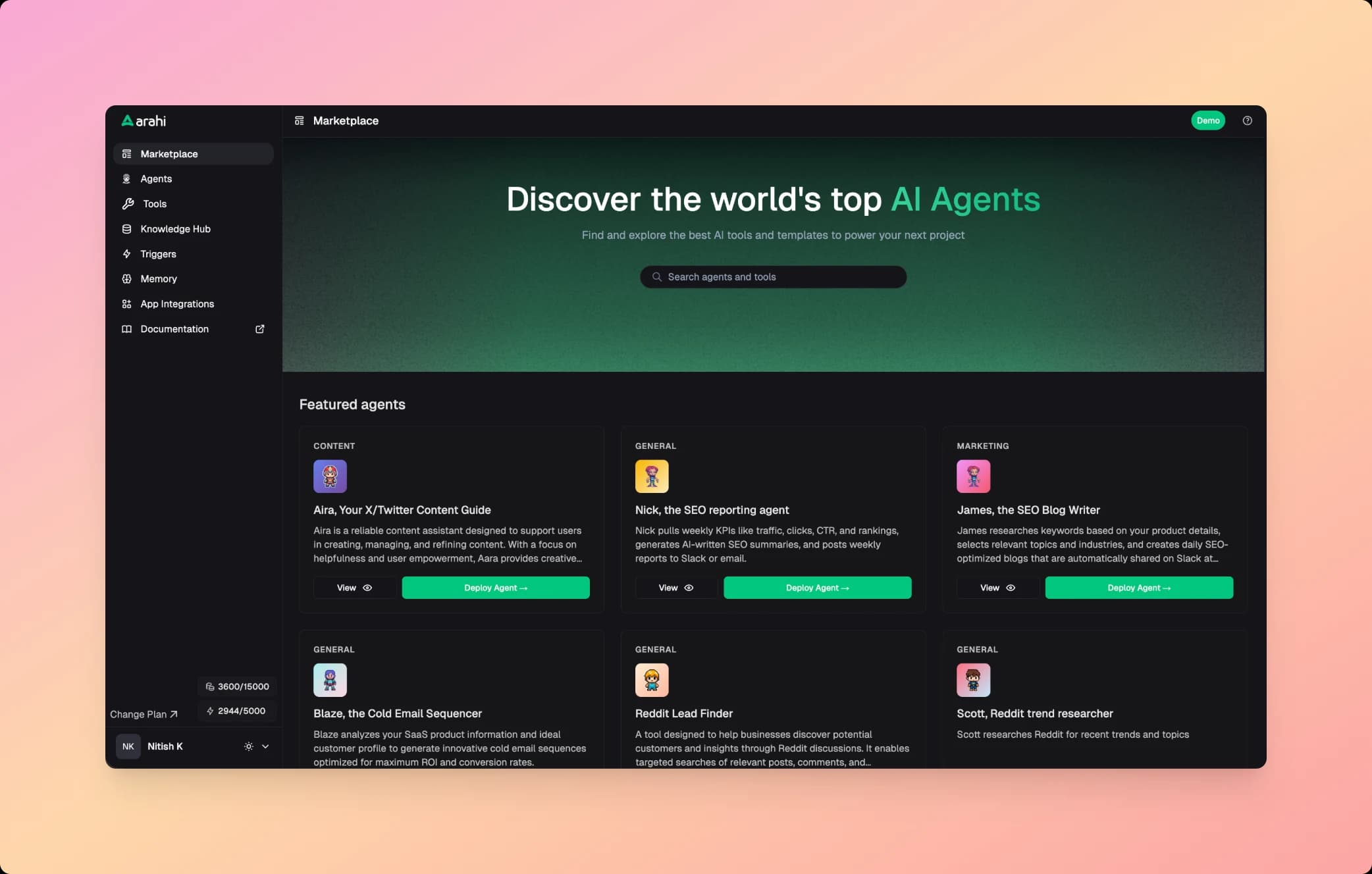
DeskFerry takes a different approach. Rather than a fixed roster of role-based helpers, DeskFerry lets you build agents around your own processes, with event triggers, conditional logic, and approval steps, across 1,500+ integrations.
This comparison examines all three platforms across pricing, capabilities, integrations, and real-world utility to help you choose the right solution for your automation needs.
Quick Answers: The Most-Asked Comparison Questions
If you're researching this space, you've probably searched one of these phrasings. Here are the short answers — full breakdowns are in the sections that follow.
Marblism vs Sintra AI: which is better?
For solopreneurs choosing between just the two: Sintra AI is the gentler, more polished entry point — 12 named "Helpers," $39+/month, designed for non-technical users. Marblism is cheaper (from $24/month billed annually) and covers some roles Sintra doesn't, such as a phone receptionist and a website builder. If you want ready-made helpers for content, social, and inbox work with the smoothest onboarding, Sintra wins; if you want inbox, calls, and lead generation bundled at a lower price, Marblism is worth a look. Neither documents a way to build your own agents or custom trigger-based workflows — for that, see the DeskFerry section below.
Sintra vs Marblism: feature breakdown
Sintra offers 12 pre-built character helpers (Soshie for social, Cassie for support, Penn for copy, etc.), a shared Brain AI, five pre-built scheduled automations, and 1,000+ integrations via Composio. Marblism offers 7 AI employees (Eva, Sonny, Stan, Penny, Rachel, Walter, Linda) covering inbox, social, lead generation, SEO, phone answering, websites, and legal drafting. Both take actions in connected apps, but both are organized around ready-made roles rather than workflows you design. The bigger choice is whether you want Sintra's polish and integration breadth or Marblism's lower price and wider set of roles.
Sintra AI vs Marblism: which scales better?
Both are built for small operators. Sintra explicitly targets solopreneurs and micro-SMBs; Marblism supports unlimited team members but caps usage at 50 hours of AI work per month. Both share the same ceiling: the work is shaped by pre-built roles, so processes unique to your business are hard to model. Businesses that need custom workflows typically move to platforms where they design the agents themselves — which is why we built DeskFerry as a third option in this comparison.
How We Compared These AI Agent Platforms
We compared Sintra AI, Marblism, and DeskFerry on the same scenarios and the same rubric, based on each vendor's documentation, pricing pages and published capabilities. The scenarios, the evaluation rubric, and the weights were written down before we scored anything, so the criteria weren't shaped around any one platform.
Conflict of interest, fully disclosed. This article is published by DeskFerry — one of the products being compared. To keep the comparison honest:
- The rubric below was fixed before any platform was rated. We did not adjust criteria afterwards.
- Every platform was judged against the same scenarios and the same business context.
- Genuine wins for Sintra and Marblism appear in every section. Where DeskFerry loses, we say so.
- Every competitor pricing claim, integration count, and quote in this article links to a primary source. Where a claim could not be sourced, we removed it rather than guess.
Comparison scenarios
Each platform was compared on the same five jobs:
- Five-step lead-gen workflow. Research a prospect, enrich firmographic data, score against an ICP definition, draft personalized outreach, log to a CRM. We compared how much of this each platform documents it can run before needing human intervention.
- End-to-end customer support ticket. Classify intent, search a knowledge base, draft a response, route or escalate. We compared where each platform's documented capabilities stop.
- One custom workflow no template covered — a specific operational use case unique to a small B2B SaaS. We compared whether each platform offers a way to build it at all.
- Integration depth on the five most-requested apps: HubSpot, Slack, Gmail, Google Calendar, Notion. We compared what each platform documents it can read, write, and trigger from — not just what is listed as "supported."
- Starter-plan ceilings. We compared the published limits on each platform's entry tier and what happens when you reach them.
Evaluation rubric
| Criterion | Weight | What it measures |
|---|---|---|
| Integration depth | 25% | Number, quality, and depth of native connections |
| Workflow execution autonomy | 25% | How much of a multi-step task completes without human approval between steps |
| Custom agent flexibility | 20% | Ability to build agents the platform did not pre-build |
| Enterprise readiness | 15% | Security posture, access controls, audit logging, scalability ceiling |
| Onboarding accessibility | 15% | Time to first useful output for a non-technical user |
Onboarding accessibility is where Sintra wins outright — its character-based UX and fast time-to-productivity are genuinely better than what DeskFerry or Marblism offer for first-time AI users. We weighted it below integration depth and workflow autonomy because most readers comparing these platforms are already past the onboarding hurdle and stuck on what their stack can actually automate.
Platform Positioning: AI Assistants vs AI Automation
Understanding what each platform actually does reveals why the choice matters so much for growing businesses.
Sintra AI: Character-Based AI Helpers
Sintra AI emerged from a 2023 experiment in Vilnius that went viral. The Lithuanian startup raised $17M in seed funding in June 2025, having grown to 40,000+ paying customers and reportedly $12M+ ARR within roughly 12 months of launch (figures from the funding-cycle press coverage; not separately confirmed by a first-party investor letter).
The platform's differentiation is its character-first design: instead of a generic chatbot, Sintra offers 12 named "Helpers" with distinct personalities. These include Soshie (social media), Cassie (customer support), Emmie (email marketer), Penn (copywriter), Milli (sales), and Seomi (SEO). Each helper proactively suggests tasks and learns from a centralized "Brain AI" that stores business context.
Target audience is explicitly solopreneurs and micro-SMBs. Sintra has positioned itself for yoga instructors, boutique owners, and solo entrepreneurs new to AI who find ChatGPT's blank interface intimidating.
Marblism: From App Builder to AI Employees
Marblism, backed by Y Combinator's Winter 2024 batch, initially launched as an AI app builder generating full-stack web applications from prompts. As founder Ulric Musset wrote on Hacker News at the time: "it's not a no-code tool - we generate code (similar to a cursor or copilot) and we expect people to review the generated codebase." The company has since moved its focus to "AI Employees", and its current homepage and pricing page no longer feature the App Builder.
The AI Employees product mirrors Sintra's role-based approach with 7 employees listed on its pricing page: Eva (executive assistant), Sonny (social media), Stan (lead generation), Penny (SEO), Rachel (receptionist), Walter (website builder), and Linda (legal). Marblism says its employees sort your inbox and draft replies, manage your calendar, post to social channels, run outreach and follow-ups, and answer calls and book appointments.
DeskFerry: Workflow-First Automation
DeskFerry approaches the market differently. Rather than a fixed set of character-based helpers, DeskFerry provides a complete AI agent platform where agents execute multi-step workflows autonomously.
The platform connects to 1,500+ business applications through its integration marketplace, enabling agents to work across your entire tech stack—CRMs, email platforms, project management tools, databases, and communication apps.
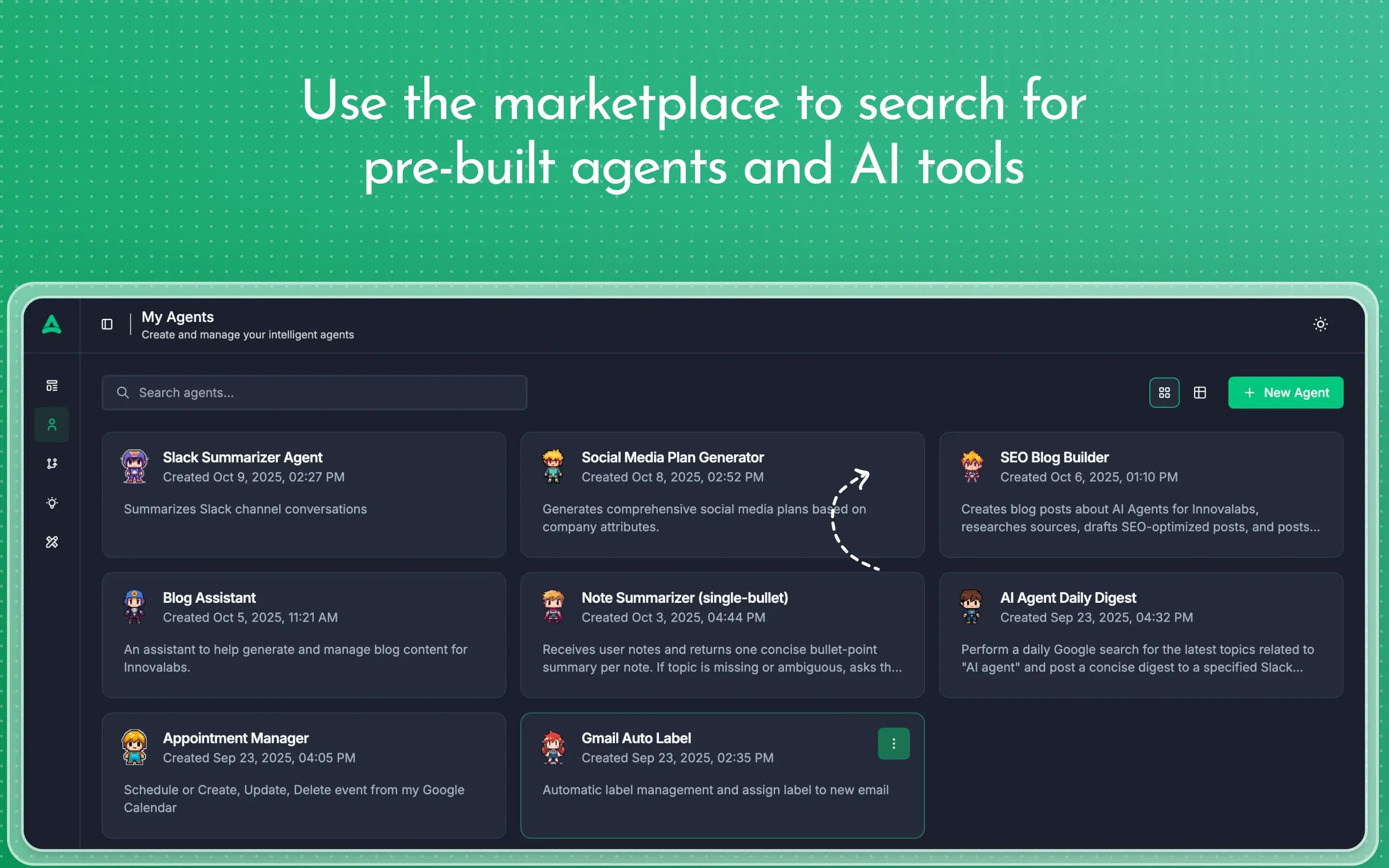
Users can deploy pre-built agents from the marketplace or build custom AI agents tailored to specific business processes. Agents handle complete workflows: research a lead, enrich their data, score qualification, draft personalized outreach, and update your CRM—all without manual intervention between steps.
With the DeskFerry Slack app, you can connect your agents to a Slack channel and run them from there — @mention an agent in a channel or DM it to kick off a task, and approve its actions without leaving Slack.
This workflow-first architecture targets businesses that have outgrown basic AI assistance and need true automation at scale.
Where Sintra and Marblism genuinely win. Sintra's character-first design — named Helpers, streaks, milestones, a polished onboarding flow — does something DeskFerry's build-your-own-agent approach does not: it lowers the cognitive barrier for someone who has never used AI for work before. The thing reviewers call a "kids game aesthetic" is the thing that gets a yoga instructor or a boutique owner from "I need to learn how to prompt" to "I just delegated my email backlog" quickly. That is real value, and DeskFerry does not solve for it. Marblism, separately, bundles roles DeskFerry doesn't package out of the box — a phone receptionist that answers calls and books appointments, and a website builder — at a lower entry price.
Integration Capabilities: The Critical Differentiator
Integration depth determines whether an AI platform can actually automate your business or remains an isolated tool requiring manual data transfer.
Sintra AI: 1,000+ Integrations via Composio
Per the Sintra Help Center, Sintra supports "1,000+ integrations powered by Composio" across email, calendars, file storage, social media, team communication, productivity, CRM (including HubSpot, Salesforce, and Pipedrive), analytics, accounting, and more. Helpers can post or schedule social content, read the inbox and send emails, create calendar events, and save or pull files. Note that Sintra's pricing page still lists "15+ integrations" per plan, so confirm the specific connections you need before buying.
Marblism: Email, Calendar, and Social
Marblism's site lists integrations with Gmail, Outlook (and other IMAP email), Google Calendar, Instagram, Facebook, X, and LinkedIn. Its employees use those connections to manage your inbox and calendar and post to social channels; the lead-generation employee sources prospects from Marblism's own lead database. Marblism does not publish a broader integration catalog or list CRM connectors.
DeskFerry: 1,500+ Enterprise-Ready Integrations
DeskFerry's integration marketplace connects to over 1,500 applications across every business category:
CRM & Sales: HubSpot, Salesforce, Pipedrive, Zoho CRM, Close, Copper
Communication: Slack, Microsoft Teams, Discord, Intercom, Zendesk
Marketing: Mailchimp, ActiveCampaign, Klaviyo, HubSpot Marketing
Productivity: Notion, Airtable, Google Workspace, Microsoft 365
Development: GitHub, GitLab, Jira, Linear, Asana
Finance: QuickBooks, Xero, Stripe, PayPal
Data: PostgreSQL, MySQL, MongoDB, Snowflake, BigQuery
This integration depth enables agents to orchestrate workflows across your entire technology stack. A lead generation agent can research prospects in Apollo, enrich data in Clearbit, score leads against CRM criteria, and create personalized sequences in your email platform—all autonomously.
| Platform | Integrations | Custom Connections | CRM Support | Workflow Triggers |
|---|---|---|---|---|
| Sintra AI | 1,000+ (via Composio) | Not documented | Yes (HubSpot, Salesforce, Pipedrive) | Scheduled, pre-built automations |
| Marblism | Email, calendar, social | Not documented | Not listed | Built into each employee's role |
| DeskFerry | 1,500+ | Yes | Yes | Yes |
Where Sintra holds its own on integrations. With 1,000+ connections via Composio, Sintra's catalog now covers most of what a solo operator or small team uses, including major CRMs. The difference with DeskFerry is less about which apps connect and more about what you can do with them: Sintra's helpers use integrations inside their pre-built roles and automations, while DeskFerry lets you chain any combination of apps into workflows you design, with your own triggers and branching.
AI Agent Capabilities: Pre-Built Roles vs Custom Workflows
The real difference between these platforms is who designs the work: the vendor (pre-built roles and automations) or you (custom agents and workflows).
Sintra AI: Pre-Built Helpers and Automations
Sintra's 12 helpers offer specialization within their domains, and Brain AI gives them a shared memory of your business context. On top of chat, Sintra ships five pre-built automations — Social Media Manager, Inbox Manager, Meeting Notetaker, Daily Summarizer, and Facebook Commenter — that run on a schedule and chain several steps (for example, generating a week of social posts and scheduling them).
What Sintra does not document is a way to build your own helpers or design your own multi-step workflows with custom triggers and branching logic. If your process fits one of its helpers or automations, it runs well; if it doesn't, you work around it.
Marblism: Pre-Built Employees, Broader Roles
Marblism's 7 AI employees follow a similar pattern with a different mix of roles, including a phone receptionist and a website builder. Marblism says its employees work around the clock in your inbox, calendar, and social accounts, run outreach and follow-ups, and collaborate with each other ("AI-to-AI collaboration" on its pricing page).
As with Sintra, you shape each employee by giving it business context rather than by building new agents or workflows. Marblism does not document custom employees, user-defined triggers, or conditional logic.
DeskFerry: Custom, Trigger-Based Workflows
DeskFerry agents operate fundamentally differently:
Multi-Step Workflow Execution: Agents handle complete processes from trigger to completion. A customer support agent can receive a ticket, analyze sentiment, search knowledge bases, draft a response, route complex issues to humans, and update your CRM—all in one automated flow.
Custom Agent Building: Beyond pre-built marketplace agents, users can create custom AI agents using natural language instructions, connecting any combination of tools and logic for unique business processes.
Conditional Logic & Branching: Agents make decisions based on data. If a lead scores above threshold, route to sales. If support ticket contains billing keywords, escalate to finance. Real automation requires real logic.
Cross-Agent Coordination: Multiple agents can work together on complex processes. A lead generation agent hands qualified prospects to a sales outreach agent, which triggers a meeting scheduler agent when interest is confirmed.
Trigger-Based Automation: Agents activate based on events—new form submission, calendar booking, email received, deal stage change—not just manual prompts.
Memory & Learning: Agents remember past interactions and context, improving responses over time and maintaining consistency across conversations.
| Capability | Sintra AI | Marblism | DeskFerry |
|---|---|---|---|
| Pre-built Agents | 12 helpers | 7 employees | Marketplace + Custom |
| Custom Agent Creation | Not documented | Not documented | Yes |
| Multi-Step Workflows | Pre-built automations | Within each employee's role | Yes, user-designed |
| Conditional Logic | Not user-configurable (documented) | Not user-configurable (documented) | Yes |
| Cross-Agent Coordination | Shared Brain AI | AI-to-AI collaboration (vendor-listed) | Yes |
| Trigger-Based Actions | Scheduled automations | Not user-configurable (documented) | Yes (events + schedules) |
| Memory & Context | Shared Brain AI | Not detailed | Full Memory System |
Where Marblism wins on roles. Marblism packages jobs DeskFerry doesn't ship as ready-made roles: Rachel answers phone calls and books appointments, and Walter builds and updates a website from prompts. If what you need is a phone receptionist and a website bundled with inbox and social help at a low flat price, Marblism covers that out of the box, while on DeskFerry you'd be building those workflows yourself.
Where Sintra's Brain AI wins. Sintra's Brain AI is a single shared knowledge base that all 12 helpers read from, so context (your tone, your customer profile, your offers) is set once rather than re-explained per agent. DeskFerry handles cross-agent context differently — each agent's memory is more powerful but more setup. For content-heavy solopreneur use cases, Sintra's "set up Brain once, every helper knows" model is genuinely faster to get value from on day one.
Use Case Comparison: Real Business Scenarios
Understanding how each platform handles common automation needs reveals practical differences.
Lead Generation & Sales
Sintra AI: Milli (sales helper) drafts cold emails and sales scripts. With email or a CRM connected, helpers can send messages and pull data, but Sintra doesn't document a way to build your own research → enrich → score → sequence pipeline.
Marblism: Stan (lead generation) finds leads from Marblism's own database and runs outreach and follow-ups, according to Marblism. You get Marblism's process rather than one built around your own ICP scoring and CRM.
DeskFerry: Lead generation agents autonomously research prospects, enrich contact data from multiple sources, score against ICP criteria, generate personalized multi-channel sequences, and sync everything to your CRM. The agent monitors responses and adjusts follow-up timing automatically.
Customer Support
Sintra AI: Cassie drafts support responses, and the Inbox Manager automation surfaces emails that need replies with drafts ready. Sintra's help center doesn't list help desk integrations, so ticket routing and escalation rules inside a tool like Zendesk aren't part of its documented setup.
Marblism: The current lineup has no dedicated support employee; Eva handles inbox replies and Rachel answers phone calls.
DeskFerry: Support agents integrate directly with Zendesk, Intercom, or Freshdesk. They analyze incoming tickets, search knowledge bases, draft contextual responses, handle routine inquiries autonomously, and escalate complex issues with full context to human agents.
Content & Marketing
Sintra AI: Penn (copywriter), Soshie (social media), and Emmie (email) generate content, and the Social Media Manager automation generates a week of posts and schedules them to connected accounts.
Marblism: Sonny posts to Instagram, Facebook, X, and LinkedIn, and Penny writes SEO blog posts.
DeskFerry: Marketing agents create content and run distribution on rules you set: schedule posts across platforms, trigger email sequences based on behavior, adjust campaigns based on performance data, and report results.
Accounts Receivable
Sintra AI & Marblism: Neither offers a pre-built accounts-receivable workflow. Sintra connects to accounting tools such as QuickBooks for data and reports, but invoice follow-ups and collections logic aren't among its pre-built automations, and Marblism doesn't list accounting integrations.
DeskFerry: Agents monitor outstanding invoices, send intelligent payment reminders based on customer history, escalate overdue accounts appropriately, update accounting systems automatically, and generate collection reports—integrating directly with QuickBooks, Xero, Stripe, and other financial tools.
Custom Workflows
Sintra AI & Marblism: You work within the pre-built helpers, employees, and automations. Neither documents a way to build agents for processes unique to your business.
DeskFerry: Build any automation your business needs. Connect any combination of your 1,500+ available integrations and handle edge cases with intelligent decision-making. Describe what you want in natural language, and the platform helps you create agents tailored to your specific workflows.
Pricing Analysis: Value Beyond Monthly Cost
Raw pricing comparisons miss the bigger picture: what do you actually get for your investment?
Sintra AI Pricing
Pricing as of September 2026 from sintra.ai/pricing. Subject to change.
- Single Helper: $39/month per helper
- Sintra X (All 12 Helpers + Brain AI): $97/month list price, shown discounted to $48.50/month on monthly billing, $23.60/month on 3-month billing, and $15.60/month on 12-month billing
- Credits: 250/month on Sintra X
- Guarantee: 14-day money-back guarantee (note: refund execution has been a recurring complaint in Trustpilot reviews)
Sintra's discounts are large, so the list price is rarely what users pay; check the current offer before comparing. The monthly credit allowance caps heavy usage.
Marblism Pricing
Pricing as of September 2026 from marblism.com/pricing. Subject to change.
- Yearly: $24/month (billed annually)
- Monthly: $44/month
- Includes: all 7 AI Employees, 50 hours of AI work per month, unlimited businesses, unlimited team members, multiple workspaces
- Guarantee: 7-day money-back guarantee
Marblism's pricing is structurally simple — one plan, one flat fee, no credit ledger. The trade-offs are the 50-hour monthly work cap and a narrower integration list.
DeskFerry Pricing
Pricing as of September 2026 from deskferry.com/pricing. Subject to change.
- Growth: $49/month — 5,000 credits
- Pro: $99/month — 12,000 credits (most picked)
- Scale: $299/month — 40,000 credits
- Integrations: 1,500+ included at all tiers
- Agents: Unlimited agents at every tier (marketplace + custom building)
- Models: OpenAI, Claude, Gemini access included
- Free Trial: 7-day free trial
DeskFerry pricing starts above the entry tiers of Sintra and Marblism. The extra spend makes sense when your processes don't fit a pre-built role and you need agents built around your own triggers, tools, and approval steps. If a ready-made helper already covers your work, the cheaper tools may be all you need.
| Pricing Factor | Sintra AI | Marblism | DeskFerry |
|---|---|---|---|
| Entry Price | $39/mo (single helper) | $24/mo (annual) | $49/mo (Growth) |
| Full Platform | Sintra X: $97/mo list, from $15.60/mo on 12-month billing | $44/mo (monthly) | Pro $99/mo, Scale $299/mo |
| Usage Limits | 250 credits/mo | 50 hours of AI work/mo | Credit-based, scales with tier |
| Integrations Included | 1,000+ (help center) | Email, calendar, social | 1,500+ |
| Custom Agents | Not documented | Not documented | Included |
| Workflow Automation | Pre-built automations | Built into each employee | Custom, trigger-based |
| Enterprise Features | Not documented | Not documented | Yes |
Where Marblism's pricing genuinely wins. Marblism's single flat plan is structurally simpler than any credit-based system, including DeskFerry's. If your usage is predictable and fits within its 50 hours of monthly AI work, Marblism gives you a no-math entry point — no credit ledger, no per-action costs. DeskFerry's credit model is built to scale with workflow complexity (a multi-step orchestration uses more credits than a one-shot task), but for buyers whose workload is steady, that complexity is a tax. Marblism's pricing honestly reflects what the product is — seven ready-made roles at one price — and it's a fair fit for steady solopreneur usage.
Enterprise Readiness & Security
Growing businesses need platforms that scale with them.
Sintra AI Enterprise Features
- No SOC 2 report or SSO documented on its public pages
- Encrypted cloud storage and Stripe-encrypted checkout noted on its pricing page
- Team and permission controls not detailed publicly
Sintra does not publish a public security or compliance page beyond its standard privacy notice; buyers in regulated industries should expect to do their own due diligence.
Marblism Enterprise Features
- No compliance certifications documented publicly
- Unlimited team members and multiple workspaces on its plan
- No enterprise access controls documented
DeskFerry Enterprise Features
DeskFerry publishes a Data Security Policy covering operational and infrastructure security:
- AES-256 encryption between data exporter and data centres
- HTTPS / TLS for all on-demand application access
- Audited employee access to subscriber data on a need-to-know basis only
- Criminal background checks for employees with subscriber-data access
- Segregated database infrastructure firewalled from the public internet
- Audit logs of physical access to data centre facilities
For businesses in regulated industries or those handling sensitive customer data, these published controls go beyond what Sintra or Marblism document publicly.
Scalability: From Startup to Enterprise
DeskFerry: Built to Scale
DeskFerry is designed for businesses at every stage. Start with simple automations on the $49/month Growth plan and expand as you grow. As your needs become more complex, create sophisticated multi-step workflows, connect additional systems, and deploy agents across more business functions. With 1,500+ integrations and custom agent capabilities, you won't outgrow the platform.
Sintra AI: Limited Growth Path
Sintra explicitly targets solopreneurs and micro-SMBs — its June 2025 funding announcement positions the product as "AI helpers for SMBs," and the platform's design (12 fixed personas and pre-built automations, with no documented custom agent building) reflects that. Its integration catalog now reaches CRMs and accounting tools, but businesses whose processes don't fit a pre-built helper have limited room to customize.
Marblism: Unclear Trajectory
Marblism has refocused from its original app builder onto AI Employees. Its plan includes unlimited team members and workspaces, but usage is capped at 50 hours of AI work per month, and the work is shaped by its seven pre-built roles.
User Experience & Learning Curve
Sintra AI: Gamified for Beginners
Sintra deliberately targets users who find AI intimidating. The character-based interface with streaks and milestones reduces anxiety for first-time AI users. The "kids game" aesthetic some reviewers criticize is intentional design for accessibility — and on this dimension, Sintra's onboarding is faster than DeskFerry's for non-technical users. Sintra gets a yoga instructor or a boutique owner to first useful output in about 30 minutes. DeskFerry's prompt-based builder is more capable but assumes the user can describe the job they want done, connect the right apps, and decide when the agent should run — that's a real ramp for someone who has never automated anything before. If the buyer is a solo operator who has never deployed an AI tool, Sintra wins on time-to-first-output. If the buyer wants a platform that grows with them, the same gentleness becomes a ceiling.
Learning curve: the shortest of the three. Limited depth means limited learning ceiling.
Marblism: Quick Setup
Marblism's AI Employees target non-technical users, and Marblism says most people connect their email and calendar in a few minutes. Getting good output means giving each employee clear business context.
Learning curve: minutes to connect accounts; ongoing tuning of each employee's instructions.
DeskFerry: Powerful Yet Accessible
DeskFerry balances capability with usability. The no-code, prompt-based builder allows business users to create agents by describing them in plain English—no programming required.
Pre-built marketplace agents deploy in minutes. Custom agents take hours rather than days. The platform provides templates, documentation, and support to accelerate adoption.
Learning curve: Minutes for marketplace agents; hours for custom workflows. Depth of capability means continuous learning opportunities as needs grow.
Real User Feedback Patterns
Sintra AI Reviews (8,000+ on Trustpilot, 4.5/5 average)
Positive themes:
- Easy onboarding and proactive suggestions
- Time savings of 10-15 hours weekly on content tasks
- Approachable interface for AI beginners
Critical themes:
- "Great ideas, underwhelming execution"
- Frustration that helpers can't share context
- Output quality requires significant editing
- Limited integration options create workflow gaps
Marblism Reviews (800+ on Trustpilot, ~4 stars)
Positive themes:
- Low pricing and responsive founder support
- Reviewers report meaningful blog-traffic gains from Penny (Marblism's blog writer)
- Fast onboarding experience
Critical themes:
- AI content requires editing for industry accuracy
- Very specific instructions needed for quality outputs
- Integration limitations restrict utility
DeskFerry Differentiation
What sets DeskFerry apart from these alternatives:
- Custom, trigger-based workflows vs. pre-built roles
- Integration depth connecting their full tech stack
- Custom agent capabilities for unique processes
- Enterprise-grade security
- Scalability as automation needs grow
Head-to-Head Comparison Summary
| Feature | Sintra AI | Marblism | DeskFerry |
|---|---|---|---|
| Platform Type | Role-based AI helpers | Role-based AI employees | Build-your-own agent platform |
| Starting Price | $39/month (single helper) | From $24/month (annual) | $49/month |
| No-Code Builder | Pre-built helpers only | Pre-built employees only | Yes — prompt-based builder |
| Pre-built Agents | 12 helpers | 7 employees | Extensive Marketplace |
| Custom Agents | Not documented | Not documented | Yes |
| Personal Assistant (Inbox/Calendar) | Yes — Inbox Manager + calendar | Yes — Eva | Yes — DeskFerry Assist, our personal AI assistant |
| Integrations | 1,000+ (via Composio) | Email, calendar, social | 1,500+ |
| Multi-Step Workflows | Pre-built automations | Within each employee's role | Yes, user-designed |
| Conditional Logic | Not documented | Not documented | Yes |
| Trigger Automation | Scheduled automations | Not documented | Yes |
| CRM Integration | Yes (HubSpot, Salesforce, Pipedrive) | Not listed | Yes |
| API Access | Not documented | Not documented | Yes |
| Enterprise Security | Limited public documentation | Limited public documentation | Yes |
| Data Encryption | Encrypted storage (vendor-stated) | Not detailed | AES-256 + TLS |
| Target User | AI beginners, solopreneurs | Solopreneurs, small teams | Growing businesses |
| Best For | Content, social, and inbox help | Inbox, social, calls, lead gen | Custom workflow automation |
Who Should Choose Each Platform?
Choose Sintra AI If You:
- Want the smoothest first-time-AI experience available — Sintra has the best onboarding in this comparison for non-technical users
- Run a solo business and want ready-made helpers that work in the apps you already use (Sintra lists 1,000+ integrations)
- Are looking for proactive content suggestions across email, social, copy, and SEO from a single shared brain (Brain AI)
- Prefer a polished, character-driven UX over a workflow-builder UI
- Don't need to design custom, multi-step workflows of your own
Choose Marblism If You:
- Want a phone receptionist and website builder bundled with inbox, social, and lead-gen employees in one low-priced plan
- Want one flat price (50 hours of AI work per month) without a credit ledger to manage
- Have a steady, content-heavy workload (blog, social, email drafts) and value pricing simplicity over workflow flexibility
- Are comfortable being early on a YC-stage product and value direct founder support
Choose DeskFerry If You:
- Need workflows designed around your own process, not just pre-built roles
- Your business runs on multiple tools that need to work together
- Want agents that execute autonomously without constant approval
- Require custom agents for unique business processes
- Enterprise-grade security matters for your business
- Are building automation that scales with growth
Other Platforms Worth Considering
If none of Sintra, Marblism, or DeskFerry fits your situation, four other categories of platform show up next to this comparison often enough to mention.
Lindy — agent-first design with a focus on autonomous task execution and a clean conversational interface. The strength is the workflow-builder feel for non-technical operators; the trade-off is fewer native integrations than DeskFerry and a younger marketplace, which matters if your stack is broad.
n8n — open-source workflow automation that runs on your own infrastructure. The strength is total control: self-hostable, customizable, free if you operate it yourself. The trade-off is operating overhead — DevOps, upgrades, debugging, and security all become your job, which is a real cost for a small team.
Relevance AI — agent platform with a developer-friendly bent and strong custom-agent primitives. The strength is depth for technical builders who want to compose multi-agent systems from low-level pieces; the trade-off is a learning curve most non-technical operators won't clear.
Make.com — visual workflow automation across thousands of apps. The strength is breadth and the most flexible "if-this-then-that" UI in the category; the trade-off is that Make is built around scenario automation first; its AI Agents are in beta on paid plans, so the agent layer is newer than the workflow product.
Zapier Agents — Zapier's AI agent layer on top of its 6,000+ app ecosystem. The strength is integration breadth, by far the largest in this list; the trade-off is the agent layer is younger than the workflow product underneath it, and Zapier Agents are billed in activities separately from Zap tasks, which adds a second usage meter to track.
Frequently Asked Questions
What's the main difference between Sintra AI, Marblism, and DeskFerry?
Sintra AI offers 12 character-named Helpers (Soshie, Penn, Cassie, and so on), a shared Brain AI, five pre-built automations, and, per its help center, 1,000+ integrations powered by Composio. It is designed for solopreneurs. Marblism offers 7 AI Employees (executive assistant, social media, lead generation, SEO, receptionist, website builder, and legal) that work inside your inbox, calendar, social accounts, and phone line. DeskFerry is a build-your-own agent platform: custom agents, 1,500+ integrations, and trigger-based multi-step workflows with conditional logic. The split is ready-made AI roles (Sintra, Marblism) versus agents you design around your own workflows (DeskFerry).
Is Sintra AI worth it in 2026?
Yes, if you're a solopreneur who wants ready-made helpers for social, email, copy, and support, plus the smoothest first-time-AI onboarding available — Sintra leads this comparison on time-to-first-output for non-technical users, and its integration list now covers 1,000+ apps, including CRMs such as HubSpot and Salesforce. It is a weaker fit if you need to design your own multi-step workflows with custom triggers and branching logic: Sintra's automations are pre-built (social posting, inbox management, meeting notes, daily summaries, Facebook comments), and it does not document custom agent building.
What are the best Sintra AI alternatives?
For custom workflow automation: DeskFerry (1,500+ integrations, custom agents), n8n (open-source, self-hostable), Make.com (visual workflow builder), and Lindy (agent-first design). For a bundle of ready-made AI employees that includes a phone receptionist: Marblism. For developer-led agent frameworks: Relevance AI and CrewAI. The right alternative depends on whether you want ready-made roles, technical control, or workflows you design yourself.
Does Marblism have an integration with HubSpot or Salesforce?
Marblism does not list a HubSpot or Salesforce integration on its site. Its AI Employees connect to Gmail, Outlook (and other IMAP email), Google Calendar, Instagram, Facebook, X, and LinkedIn, and its lead-generation employee sources prospects from Marblism's own lead database. Sintra's help center lists HubSpot, Salesforce, and Pipedrive among its 1,000+ integrations. DeskFerry integrates with HubSpot, Salesforce, Pipedrive, Zoho, Close, and Copper.
Which AI agent platform has the most integrations?
Of these three: DeskFerry, with 1,500+ integrations spanning CRMs, marketing tools, communication, productivity, dev tools, finance, and databases. Sintra is close behind, with 1,000+ integrations powered by Composio according to its help center (its pricing page still advertises "15+ integrations", so confirm what your plan covers). Marblism lists email, calendar, and social connections rather than a broad catalog. For broader context, Zapier has 6,000+ app connections.
Can I migrate from Sintra AI to DeskFerry?
Yes. Sintra's helpers (Soshie for social, Penn for copy, Cassie for support, Milli for sales) can be rebuilt as DeskFerry agents with triggers, branching, and hand-offs you define — for example, draft and schedule social posts, send emails through your sequencer, and log conversations to your CRM in one workflow. Sintra's Brain AI shared knowledge base maps to DeskFerry's per-agent memory. The main change is moving from pre-built automations to workflows you design yourself.
What's the cheapest AI agent platform for custom workflow automation?
DeskFerry's Growth plan is $49/mo (5,000 credits) with 1,500+ integrations and custom agent creation. n8n is free if you self-host and operate it. Make starts at $9/mo, with AI Agents in beta on paid plans. Marblism is cheaper ($24/mo billed annually) and its employees do act in your inbox, calendar, and social accounts, but it is built around its pre-built roles rather than workflows you design. Sintra's all-helpers plan is heavily discounted on longer billing periods (see the pricing section).
Are Sintra AI and Marblism actually AI agents, or just AI assistants?
They sit in between. Both take real actions in connected apps: Sintra's helpers can post and schedule social content, send emails, and create calendar events, and Marblism's employees manage inboxes, post to social, run outreach, and answer calls. The difference is who designs the work. Sintra and Marblism give you pre-built roles with pre-built automations; DeskFerry lets you build agents around your own process — research a lead, enrich it, score it, draft outreach, log it to a CRM — with your own triggers, branching, and approval steps.
The Verdict: Pre-Built Roles vs Custom Workflows
The fundamental question is who designs the work. Sintra and Marblism give you ready-made AI roles that act in your connected apps — posting to social, handling your inbox, managing your calendar, and in Marblism's case answering calls. DeskFerry lets you build agents around your own processes, with the triggers, branching, and approval steps you choose.
For businesses whose processes fit a pre-built helper, Sintra and Marblism are cheaper and faster to start. For businesses that need to connect systems in their own way, handle edge cases with conditional logic, and add workflows as they grow, DeskFerry's custom agents and workflow builder are the better fit.
The choice between these platforms comes down to a simple question: Do you want ready-made AI roles, or agents built around how your business actually works?
Sintra AI and Marblism each have strengths DeskFerry does not compete on: Sintra's onboarding for first-time AI users is genuinely the best in this comparison, and Marblism bundles roles like a phone receptionist and website builder at a low flat price. But neither documents a way to design your own agents or workflows. DeskFerry is built for that.
With 1,500+ integrations, user-designed multi-step workflows, custom agent creation, and enterprise-grade security, DeskFerry is a platform you can build your business operations on.
Integration counts are no longer the whole story: Sintra now lists 1,000+ integrations and DeskFerry 1,500+. The bigger gap is flexibility — whether you can combine those connections into workflows that match your process, rather than the vendor's.
Key Takeaways
When evaluating AI agent platforms for business automation, these differences matter most:
-
Sintra AI and Marblism offer pre-built, role-based helpers that can act in connected apps through pre-built automations, while DeskFerry lets you build custom agents that run trigger-based, multi-step workflows you design.
-
Integration coverage: Sintra lists 1,000+ integrations via Composio, Marblism lists email, calendar, and social connections, and DeskFerry connects to 1,500+ apps.
-
Custom agent creation is DeskFerry's core—neither Sintra nor Marblism documents building your own agents beyond their pre-built personas.
-
Enterprise-grade security: DeskFerry's Data Security Policy documents AES-256 encryption, audited employee access, and segregated infrastructure; Sintra and Marblism publish less detail.
-
Fit matters more than features. If a ready-made helper covers your work, the cheaper tools may be enough; if your processes are specific to your business, custom workflows deliver more value.
Choose your platform based on whether you need ready-made AI roles or workflows built around your own process.
Ready to automate your business with AI agents that actually work? Get Started →