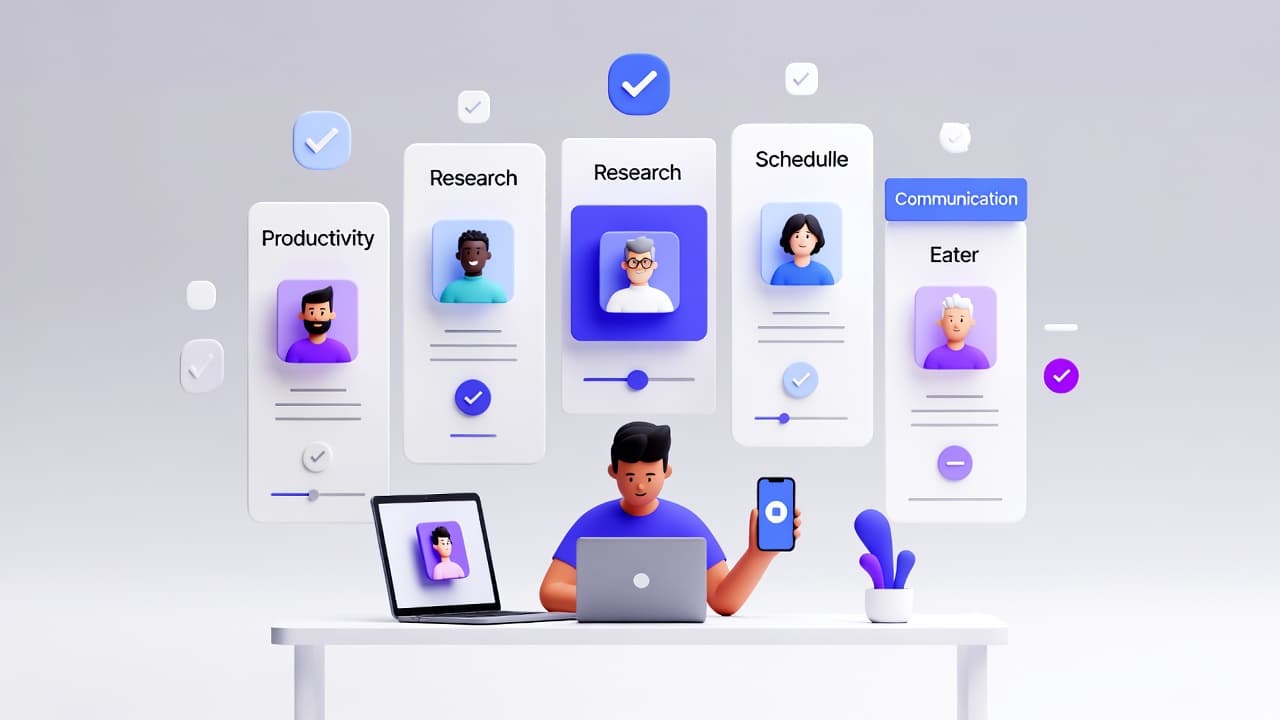
Conversational AI used to mean chatbots — clunky, scripted, vaguely embarrassing. In 2026 the category looks completely different. Modern conversational AI is LLM-powered, multi-turn, action-taking, and (in the best implementations) genuinely indistinguishable from a competent human first responder.
The category also quietly merged with AI agents. The platforms that lead in 2026 are AI agent platforms with strong conversation surfaces, not chatbot platforms with bolted-on AI.
This guide is the practical playbook for teams shipping conversational AI without falling into the hype cycle.
What conversational AI actually is in 2026
Three properties define modern conversational AI:
- Multi-turn understanding: holds context across a full conversation, not just the last message.
- Tool use: takes real actions — looks up a customer, processes a refund, books a meeting, updates a CRM — not just generates text.
- Multi-channel: the same underlying agent runs across more than one channel — web chat, email, in-app, messaging platforms, and in some cases voice.
If a system is missing any of those, it's a chatbot, not conversational AI.
The channels that matter
| Channel | Use case | 2026 status |
|---|---|---|
| Web chat | Lead capture, support deflection, pre-sales Q&A | Mature, table stakes |
| In-app | Product help, contextual onboarding, upsell | Mature |
| Voice | Phone support, outbound sales, scheduling | Rapidly improving (sub-second latency now common) |
| Async support, lead nurture, intake forms | Mature, often underused | |
| Slack/Teams | Internal ops, IT support, HR | Growing fast as work moves to chat |
| SMS/WhatsApp | Reminders, confirmations, low-touch support | Region-dependent, large in some markets |
The mistake most teams make is starting with a single channel (usually web chat) and then trying to bolt on others later with separate tools. The cheaper architecture in 2026 is to pick a platform that covers as many of your channels as possible with one agent.
Designing conversations that don't loop
Three patterns separate good conversational AI from frustrating chatbots:
- Confirm before acting on irreversible operations. "I'm going to process a $200 refund — confirm?" prevents costly errors.
- Bail out gracefully. After two turns of confusion, hand to a human with a transcript. Never let the agent thrash.
- Ground in actual data, not hallucination. Retrieval-augmented generation against your help docs, knowledge base, and customer record is non-negotiable.
Why DeskFerry for conversational AI in 2026
DeskFerry's positioning in this category is straightforward: you get autonomous AI agents on your text conversation channels, integrated with your real business stack, on a flat plan instead of per-resolution metering.
What that means in practice:
- Same agent, multiple channels. Build it once, deploy to your website or app via the embeddable chat widget, email, and Slack. DeskFerry doesn't do voice or phone calls.
- 1,500+ integrations. The agent doesn't just talk — it acts. CRM updates, refunds, order lookups, ticket creation, calendar bookings.
- Plain-English setup. Describe the agent's job; the platform builds it.
- Flat pricing. Plans from $49/mo, priced per plan with no per-resolution charges. Predictable as conversation volume grows.
For deeper comparisons see our best conversational AI assistants ranking and the Intercom vs Zendesk vs DeskFerry breakdown.
When something other than DeskFerry makes sense
- Pure chat assistants for thinking work: ChatGPT or Claude are unmatched for drafting and reasoning. They don't act on your apps natively, so most teams pair them with an action-taking platform.
- If you're still on Drift: Drift has been sunset, so conversational-marketing teams need a replacement. See Drift alternatives for options.
- Zendesk/Intercom for legacy enterprise support desks: deep ticketing depth and entrenched workflows.
- Dedicated voice AI tools for phone support: if calls are your main channel, you need a voice-first platform alongside a text agent platform.
Measuring success beyond CSAT
The conversational AI metric trap is over-indexing on customer satisfaction scores. A polite chatbot that escalates everything has high CSAT and zero business value.
The dashboard that actually matters in 2026:
- Resolution rate — % of conversations finished without human handoff.
- First-contact resolution — % resolved on the first interaction.
- Sample-audit accuracy — random spot checks on agent answers for factual correctness.
- Cost-per-conversation — total platform cost divided by conversation count.
- Business outcome metric — pipeline generated for sales agents, tickets deflected for support, deflection-to-self-serve for product.
Get started
Try DeskFerry — set up your first conversational AI agent (chat, email, or Slack) in under an hour. 7-day free trial; plans from $49/mo.
Related: Best conversational AI assistants · Best AI assistant for work 2026 · Best AI agent customer support automation 2026 · Intercom vs Zendesk vs DeskFerry